
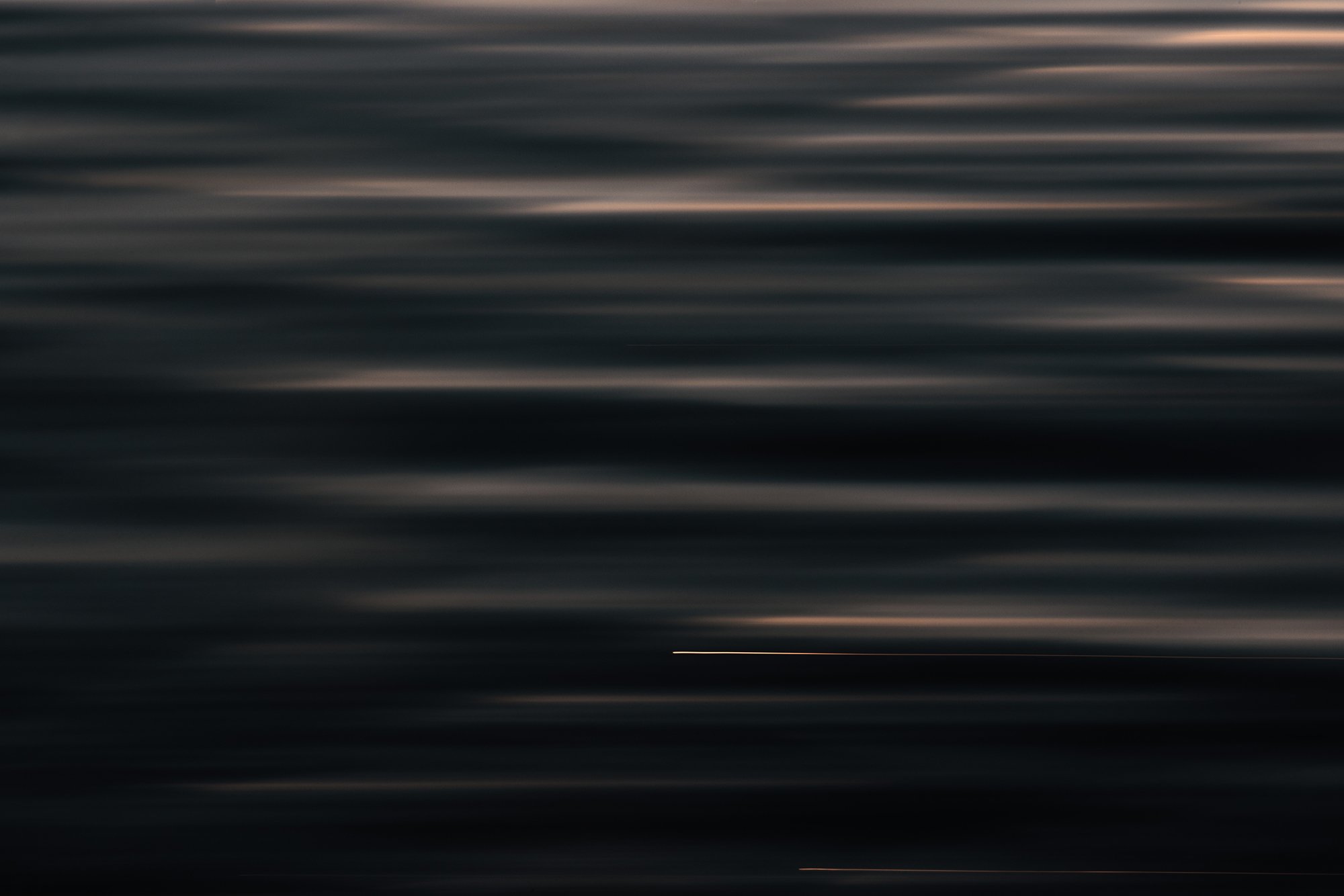
what the water gives / what the water holds
An ongoing photographic and research-based practice -Noosa Heads, 2025–2026
CONCEPT STATEMENT:
We live in a world that pulls us away from stillness. Constant connection to our devices has left many of us more stressed, more distracted, and more estranged from the natural world than perhaps any generation before us. This project began as a personal response to that detachment.
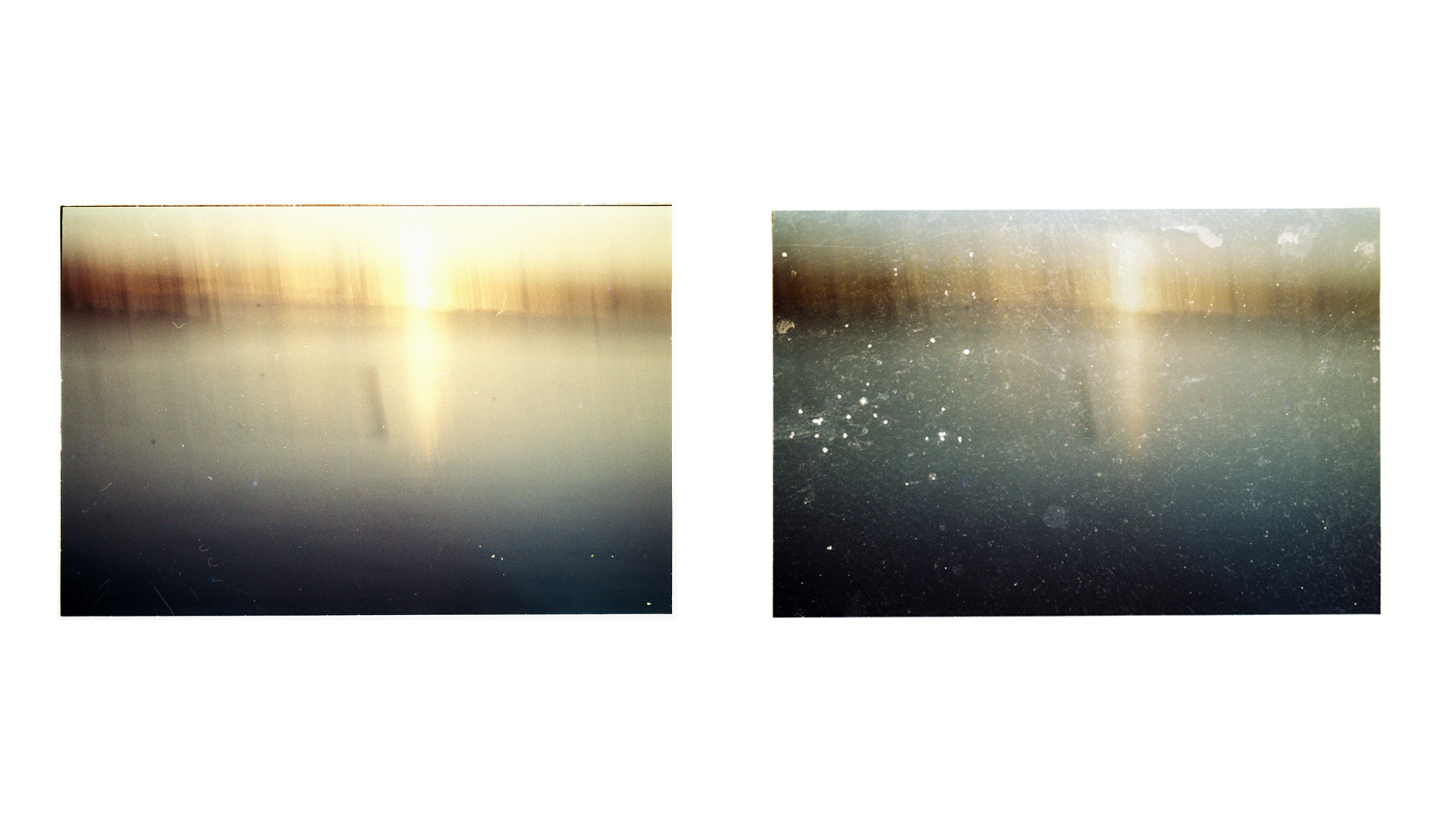
For every day of March 2026, at roughly the same time of day, I returned to the same place: the point where the Noosa River opens into the ocean. I chose to shoot on 35mm film — to force intention, to slow everything down. I photographed the surface of the water as it moved, shaped by wind, pulled by tide, alive with light and sediment and the slow dance of ocean meeting river. After development, I surrendered the film back to the water.
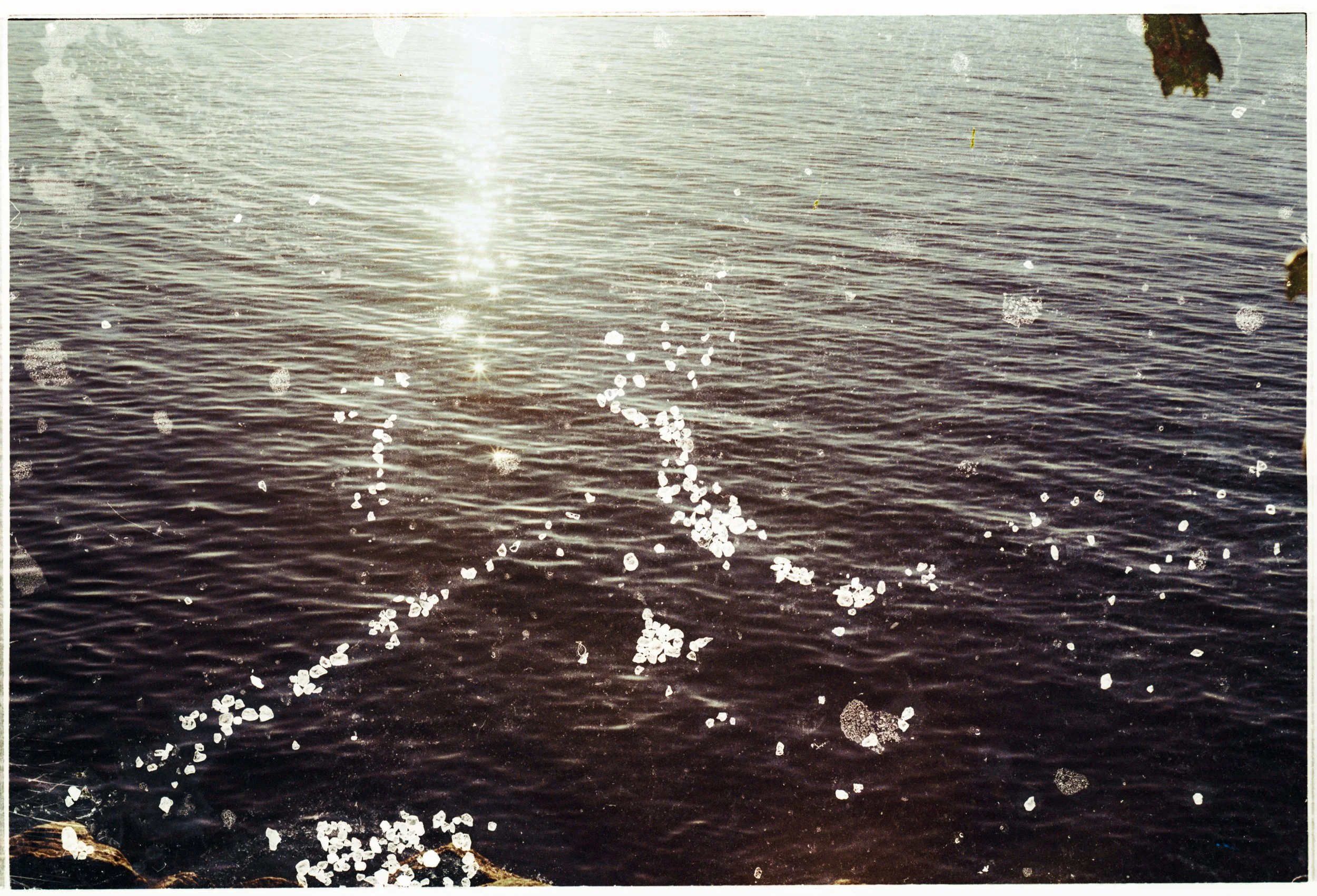
Submerged in that same river, the negatives absorb what it carries: salt, sand, organic matter, the residue of the place.
The resulting images exist in two layers, inseparable. Underneath, my photograph: a human act of attention, of showing up, of choosing this moment over another. On top, the water's response: unplanned, indifferent, precise in its own way.
These are not images of nature — they are made with nature.
MATERIALITY & COLLABORATION
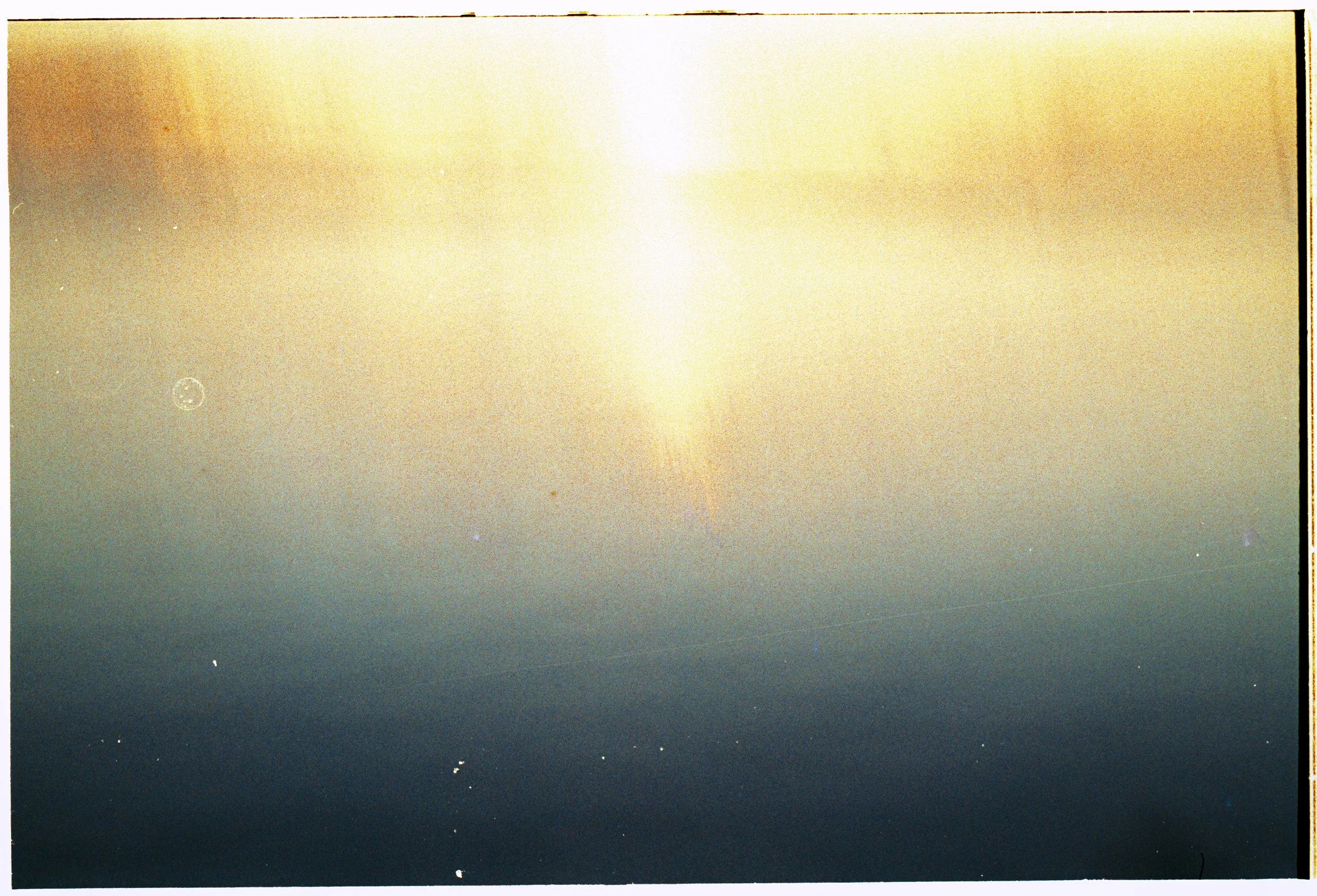
Central to this project is the surrender of the photographic material back to its environment – not as metaphor, but as method.
After each roll is developed, the film is submerged in the same water it photographed. Saltwater, tidal sediment, and organic matter act directly on the photographic surface. Each submersion is timed, recorded, and unrepeatable. The water's trace is specific to that day, that tide, that temperature.
The process also incorporates:
Repeated return to the same sites across changing tides, seasons, and conditions
35mm film as the primary medium – its slowness and materiality are intrinsic, not incidental
Handwritten metadata recording environmental variables – wind, tide, sea surface temperature, as part of the work itself
Written reflection and journaling as parallel inquiry
Photography here is a method of attention. A way of staying with experience rather than capturing a decisive moment. There is something about returning to the same place, day after day, that changes how you inhabit time. The estuary doesn't care about consistency, only transition. Learning to show up anyway – present, unhurried, without control – felt like its own kind of remedy.
The water as sole author
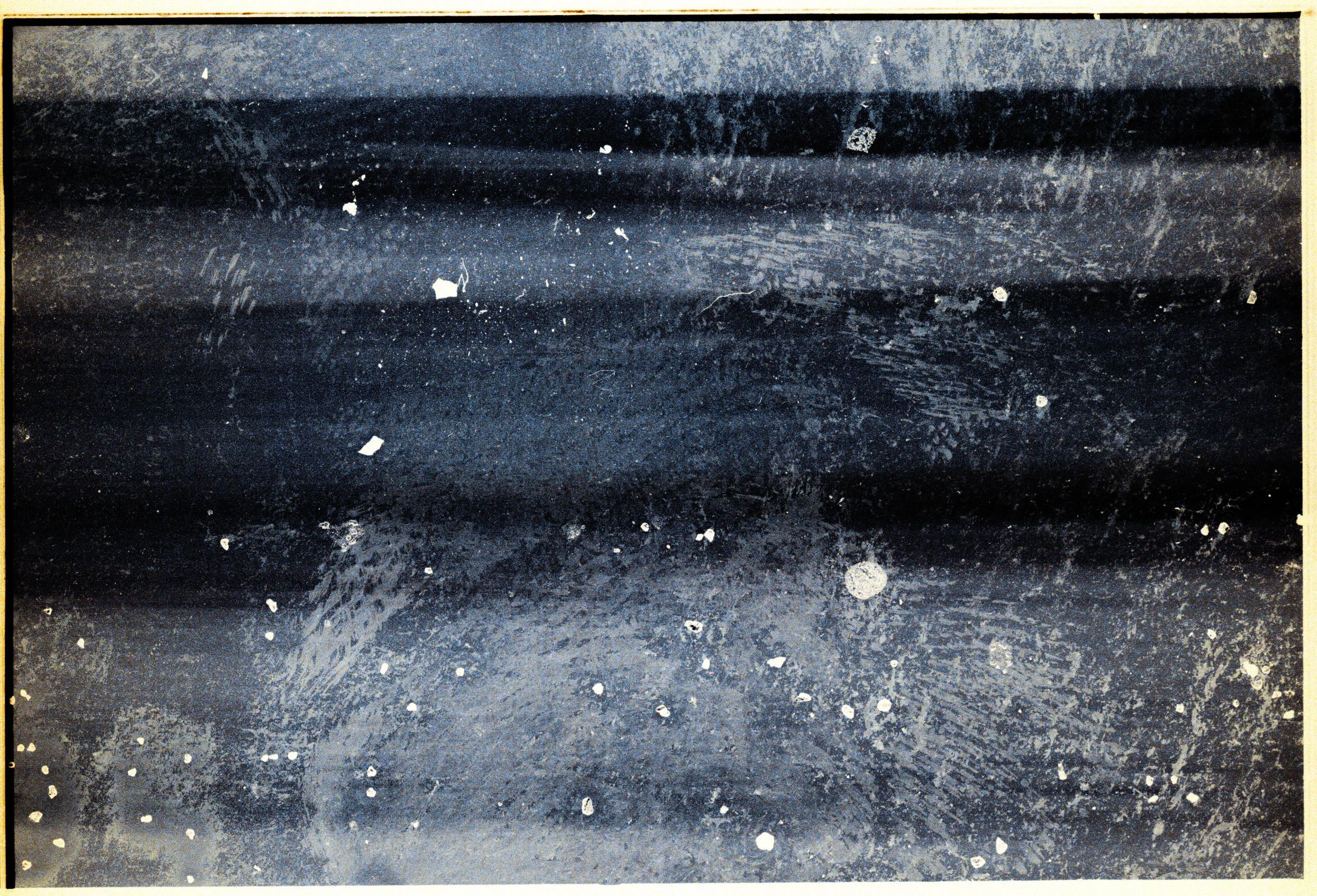
When I scanned my first roll, I noticed a few un-shot frames at the end – frames I had never exposed. The water had made its own images, without me.
If the camera images are what the water gives, these are what the water holds: something that feels like the unconscious mind, lost in a galaxy of stars.
These unshot frames are now presented alongside every camera-made image in the series. They are not accidents. They are the work the water made when I got out of the way.
Influences & dialogue
Dora Maar -
Double exposure and montage Maar's photographic montages – the human figure embedded within or beneath natural forms– underpin the compositional logic of this project. The self beneath the water. Nature overlaid. This layering is both technical and philosophical: a refusal of the boundary between human and environment.
Hiroshi Sugimoto (Seascapes) -
Seascapes (1980–ongoing) Sugimoto's long-term photographic series transforms the ocean from subject into a mirror for human consciousness. I keep returning to this minimalism – not to replicate it, but to understand what he located there: the ocean as a surface for inner reflection, perception, and the passage of time. This project proposes the opposite movement – differentiation rather than distillation – but could not exist without his precedent.
Cameron Robbins - Anemograph, River Pulse -
Cameron Robbins is an artist who collaborates with natural forces, designing mechanical instruments that translate invisible energies, such as wind, tides, and atmospheric shifts, into physical marks. His Anemograph series records light drawn by wind movement as a still photograph, allowing nature itself to become the drawing hand.
Roni Horn - Still Water (The River Thames, for example)
Still Water (The River Thames, for Example) (1999) Horn's sustained attention to a single river – returning, looking, finding difference in sameness – establishes deep return as both method and meaning. Her use of marginal text to shape interpretation alongside the image is a direct influence on how handwritten metadata functions in this work.
Caspar David Friedrich -
Caspar David Friedrich (1774–1840) the Romantic sublime Friedrich used landscape to express emotion – a place of inner reflection and confrontation with the power of the natural world. The relationship between human smallness and natural immensity runs through this project, not as nostalgia, but as something physiological and urgent.
Hokusai's Great Wave
An iconic woodblock print known as 'The Great Wave' designed by Japanese artist Katsushika Hokusai in about 1831. It's part of a series titled "Thirty-six views of Mount Fuii" The Great Wave embodies the tension between beauty and danger, a central duality in my project. Like the ocean itself, the print is simultaneously alluring and threatening, serene and sublime. It reflects human smallness in relation to nature's immense power, which is a theme echoed throughout my research, from Burke's sublime to modern understandings of tides, wind, and planetary motion.
Research foundations
Wallace J. Nichols, Blue Mind (2014)
Nichols coined the term "Blue mind" to describe the mild meditative state we enter near water – supported by neuroscience and environmental psychology. This project explores that state phenomenologically: what does it feel like, and can it be made photographic?
Rachel Carson, The Sea Around Us (1951)
Carson writes that each of us carries in our veins a salty stream, its elements combined in almost the same proportions as the sea itself. We are not separate from water – we are made of it. Her work, which bridges science and poetry, models the ambition of this practice.
Masaru Emoto, The Hidden Messages in Water (2004)
Emoto proposed that water is responsive – that it carries and reflects the energy of its environment. Whether taken literally or as metaphor, it sharpens the central question of this work: what does water hold? The un-shot frames make this question not philosophical, but physical.
Exhibition history
Trace Gallery – Photography as Process, April–May 2026
Graduate Exhibition, Photography Studies College Melbourne, May 2026
What the water gives / What the water holds is an evolving body of work, open to exhibition, publication, and site-responsive installation. Enquiries welcome.
What the water gives is permission — to stop, to breathe, to exist without pressure. What the water holds is everything you forgot to notice.